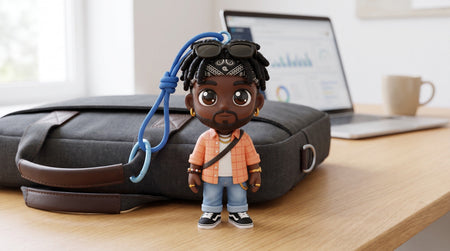

The invoice came back from accounting with one line highlighted and a question attached: how much of this is actually deductible?
Sixty client gifts had gone out that December. Finance was not asking whether sending them was a good idea. They were asking something narrower, and most people who pick corporate gifts have never read the rule that answers it.
IRS Publication 463 sets two rules side by side. Together they draw a line that a lot of buyers cross without knowing it is there.
📋 The Two Rules Most Buyers Never Read
Rule one. A business can deduct no more than $25 per recipient per year on gifts given to an individual. The limit comes from a 1962 statute, and Publication 463 still prints the same figure today, unadjusted for six decades of inflation.
Rule two. An item costing $4 or less, permanently imprinted with your company name and handed out as one of many identical pieces, is not counted as a gift at all. It sits outside the gift rules entirely.
Read those two together and the tax code has quietly sorted your options into two bins: things it counts as gifts, and things it does not bother to call gifts in the first place.
The branded pen was never a gift. The tax code stopped calling it one in 1962.
Most buyers react to the $25 figure by shrinking the budget until it fits. That is the wrong move, and it comes from a misreading.
$25 is a deduction ceiling, not a spending ceiling. Nothing prevents a company from sending a $200 gift. The portion above $25 simply does not come off the tax bill. A number set in 1962 should not be deciding what your best client receives in 2026.
There is a second rule worth knowing before you split the list. A gift sent to a client company, but intended for one particular person to use or enjoy, counts as an indirect gift to that person and lands back under the same $25 ceiling. Gifts to a client's family member are generally treated the same way. Addressing the parcel to the company does not reset the limit.
One more detail, because most writing on this topic leaves it out. Accounting blogs commonly say that personalization, packaging and shipping fall outside the $25. Publication 463 attaches a condition they skip: a cost is incidental only if it does not add substantial value to the gift.
For a piece made from a specific person's photo, the customization is the value. It counts toward the limit. You are better off hearing that from us now than from your accountant in January. All of the above describes US federal rules, and none of it is tax advice: your own finance team should confirm how it applies to your books, and a client list spanning several countries will meet a different rule in each of them.

🎁 Why the Safe Choice Gets Regifted
Ask an account manager what became of the premium travel charger a vendor sent last year, and listen to the pause before the answer.
The safest client gifts share one property: anyone could use them. A charger, a bottle of wine, a leather notebook, a candle in heavy glass. Nothing is wrong with any of them. That is the problem. A gift anyone could use is a gift that can be handed to somebody else, and anyone who has spent a few years in sales has watched it happen.
When that happens your budget was spent, your logistics ran, and the relationship gained nothing. The gift did not fail because it was cheap. It failed because it was interchangeable.
A keepsake made in the likeness of the person receiving it cannot be passed along. There is nobody else it fits. That matters more in client gifting than anywhere else, because the entire point of the gesture is to say that this one was prepared for you specifically.
There is a practical version of this test. Before ordering anything, ask whether the item would still make sense if it arrived at the wrong address. If the answer is yes, it is inventory, not a gift.
Working out whether a custom run fits your client list this quarter?
Talk to Our Business Team →🏢 Matching the Gift to the Relationship
Not every client on the Q4 list occupies the same place in the business, and sending all of them the same thing is what produces the drawer full of chargers.
Long-standing accounts
These are the relationships where people on both sides know each other's families. A handcrafted personalized figurine modeled on the client contact reads as attention rather than expense, and it survives an office move in a way a consumable does not.
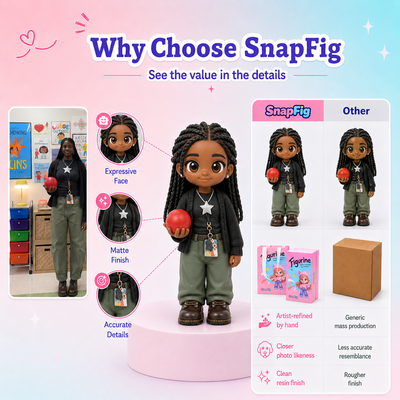
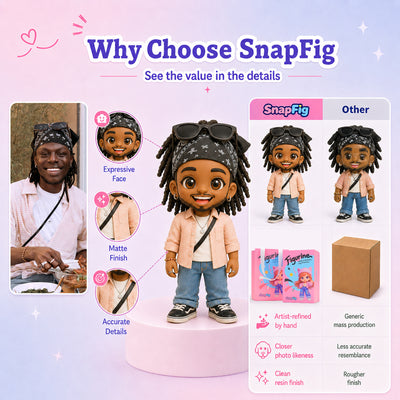
Watch what happens when someone is handed one. They turn it over. Premium resin has real weight to it, more than the size suggests, and the hand-finished detail rewards a second look: the particular jacket, the way the hair actually sits. Those few seconds of turning it over are the whole return on the gesture.
Newly signed accounts
The first gift sets the tone for everything after it, and how it arrives matters as much as what it is. Handed over in person at the kickoff meeting, a piece made in that person's likeness gives the room something to react to and photograph. Couriered to a reception desk in week one, before anyone has met, the same piece reads as presumptuous. Wait for the first real meeting, then bring it.
Real estate and referral-driven work
Agents and brokers give gifts at closing, and those gifts have an unusual second job: they sit in the client's new home where visitors ask about them. A keepsake of the family keeps working long after the transaction closes. For a referral-driven business, that is not sentimentality. That is where the next listing comes from.
Where restraint matters
Some industries cap what their staff may accept. Finance, healthcare, government contracting and many publicly listed procurement teams publish limits, and an expensive gift can put your contact in an awkward position or come straight back unopened.
This is more common than most senders assume. SHRM's guidance on workplace gift and bonus policies notes that many employers either bar outside gifts altogether or set a maximum value above which the recipient has to report what arrived. Your thoughtful gesture can turn into a form your contact has to fill out.
Researchers at IESE Business School propose a six-question check before any business gift goes out. The one that does the most work in corporate gifting is the transparency question: "Can I explain it openly to others without embarrassment?" A custom keepsake passes it easily. Its value sits in the work and the attention rather than the price tag, which is precisely why it clears policies that a luxury hamper does not.
So ask before you order. One question to an assistant takes a minute, and it saves you finding out the hard way in the second week of December.

📦 What Procurement Needs to Know
Choosing the gift is the short part. Getting sixty of them approved, produced and delivered is where a client gifting project actually lives or dies.
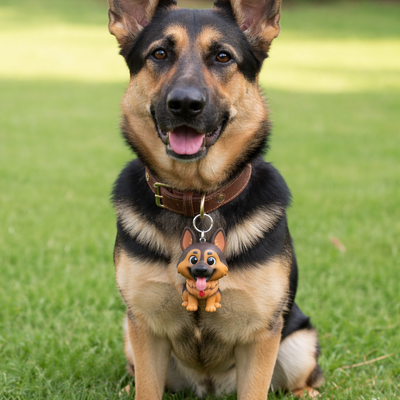
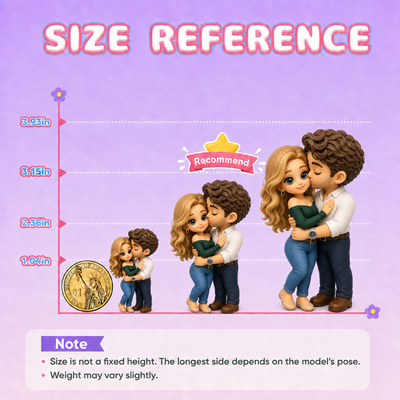
Minimum order is 50 units. Below that, ordering directly from the figure keychain range is the faster route. Volume discounts start at 50 units and step up at 100 and 200, so the per-piece figure in your quote drops as the list grows.
Packaging is part of the decision, not an afterthought. Client gifts get opened at a reception desk or across a meeting table, so how the piece presents itself matters. Your company logo can go on the base or the packaging. Branded gift boxes are available from 100 units, and fully white-label packaging from 200.
Every recipient can be different. This matters more for clients than for staff. Each person's own likeness, individually modeled, is how SnapFig runs these orders by default. A single design repeated across the batch is available too, and it costs less, but it gives up the exact property that stops a gift being passed along.
Nothing goes into production before you have seen it. You send the photos, the in-house modeling team at SnapFig builds a digital preview of every piece, and the batch moves forward only once you sign off. Corrections happen on the preview, while changing something still costs nothing.
If you want proof before committing the whole list, ask for a sample once the project is confirmed, and it gets revised until you approve it. That is also the point at which legal teams usually ask what happens to the photos: they are used to build the pieces and then deleted.
Invoices, purchase orders and bank transfers are all supported. Payment is in full up front, since custom work goes into production as soon as the preview is approved. Quotes include shipping and customs duties, which matters when a client list crosses several countries.
A client gift program lives or dies on the approval step, not the catalog.
🗓️ Ordering for a Q4 Client List
The clients most worth a considered gift are also the ones whose gift lands in the middle of a very crowded December.
Custom work runs on a different clock than catalog stock. There is no warehouse to pull from, because each piece is built after the order, from photos that have to be collected first. That collection step is the one buyers underestimate: chasing a usable photo for sixty external contacts takes longer than chasing sixty colleagues down a hallway.
Start gathering photos before you finalize the list. For client-facing gifts, an executive assistant is usually a faster route to a good photo than the client themselves, and asking early avoids having that conversation in mid-December.
You do not have to sort the photo problem out alone. A dedicated account manager at SnapFig picks the project up within 24 hours of the inquiry, confirms the exact schedule in your quote working backwards from the date you need everything in hand, and flags any photo that will not hold up before it reaches the modeling stage.
If the date is tight, say so in the first message rather than after the preview stage. The wholesale and bulk orders page covers how a full run works, from photo collection through to shipping each piece to its own address.
The measure of a client gift is not what it costs, and it is not what portion of it you can deduct. It is whether the client brings it up, unprompted, the next time you are in a room together. Interchangeable gifts never come up. The one that could only have been made for that person always does.
- Each client receives a keepsake handcrafted from their own photo
- Orders from 50 units, with volume discounts at 50, 100 and 200
- Digital preview approval on every piece before production starts
- Quotes include shipping and customs duties to every recipient country
- Invoices, purchase orders and bank transfers all supported
Send us the headcount and the date you need them in hand, and a dedicated account manager comes back within 24 hours with a real schedule.
Request a Bulk Quote →Frequently Asked Questions
What is a good gift to give clients?
Something made specifically for that client. A gift anyone could use can be passed along to someone else, which quietly cancels the gesture. A keepsake handcrafted from the client's own photo has nobody else it could fit.
Are client gifts tax deductible?
Yes, up to $25 per recipient per year under US federal rules. That $25 is a deduction ceiling rather than a spending limit, so companies routinely send more and simply deduct less. Confirm the details with your own finance team.
Do customization and shipping costs count toward the $25 limit?
Usually yes for a custom piece. Incidental costs sit outside the limit only when they do not add substantial value, and on a made-to-order keepsake the customization is the value itself.
What are the best high-end client gifts for corporate buyers?
Made-to-order keepsakes outperform luxury catalog items, because they cannot be regifted and they usually clear company gift policies that an expensive hamper does not. A personalized figurine of the client contact is the clearest example.
What is the minimum order for custom 3D printed client gifts?
50 units. Below that, ordering directly from the product pages is faster and simpler. Volume discounts begin at 50 units and step up again at 100 and 200.
Can every client gift in the order be different?
Yes. Modeling each recipient individually from their own photo is how SnapFig runs these orders by default. A single repeated design costs less but gives up the property that stops a gift being passed along.
Can you add our company logo to the gift or packaging?
Yes. Your logo can go on the base or the packaging. Branded gift boxes are available from 100 units and fully white-label packaging from 200 units.
Do you accept purchase orders and issue invoices?
Yes. Formal invoices, purchase orders and bank transfers are all supported. Payment is in full up front, since custom work goes into production as soon as you approve the preview.
How do we collect photos from external clients?
Start early and go through the executive assistant rather than the client. A dedicated account manager reviews what comes in and flags any photo that will not hold up before it reaches the modeling stage.
Can you ship each client gift to a different address?
Yes. Every piece can go to its own recipient address, and the quote includes shipping and customs duties for each destination country.