The average person takes more photos in a single weekend than their grandparents took in a decade. We document everything. The dog yawning. The first apartment. The last good day with someone we loved.

And then those photos sit. Trapped behind a sheet of cold glass, scrolled past at 60 frames per second, eventually buried under thousands of newer images we'll also forget to look at.
There's a quiet ache in this. You know the photo is there. You can find it in three taps. But you can't hold it. You can't set it on your desk where your eye lands on it accidentally. You can't carry it in your pocket and feel it knock against your keys.
Psychologists have a term for what's missing here: haptic memory. It's the way our brains encode emotional information through touch. When you hold something physical, your brain processes the experience through more sensory channels at once - sight, weight, temperature, texture - which is why a worn baseball card from your dad can hit harder than a perfectly preserved scan of it. Touch deepens recall. Glass screens flatten it.
This is the case for tangible memorial gifts, and it's the reason a Memory Figurine has become one of the most quietly powerful keepsakes you can give or keep.
🧠 The Psychology of Touch: Coping with Loss and Longing
Grief and longing are physical experiences before they are emotional ones. People describe loss as a "weight on the chest." They describe missing someone as an "ache." The body looks for something to do with the feeling, and the brain looks for something to hold.
Did You Know? This isn't poetic exaggeration. Research on bereavement consistently finds that mourners gravitate toward physical objects connected to the person they've lost - a sweater that still smells like them, a watch, a coffee mug. These objects become what therapists call transitional objects in adulthood, much the way a stuffed animal soothes a child. They give the nervous system something to settle on.
Digital photos can't do this work. They're brilliant at storage. They're terrible at comfort.
What's interesting is that the same mechanism applies to longing as it does to grief. Missing your partner during a six-month deployment activates similar emotional circuits as missing someone who has passed. Your brain isn't drawing the line we draw between "gone temporarily" and "gone forever." It just registers absence.
That's why a physical keepsake serves both ends of the same emotional spectrum. It comforts the person grieving a loss. It also comforts the person waiting for a return. The need underneath both is identical: something to hold when the person you want isn't here.

🐾 Pocket-Sized Comfort: Navigating Pet Loss with Tangible Keepsakes
Pet loss is uniquely brutal because the rest of the world doesn't always treat it as real grief. People take three days of bereavement leave when a parent dies. When their dog of fourteen years dies, they're often expected to be at their desk Monday morning, replying to emails as if the floor of their home life hasn't just dropped out.
The Cruelty of Absence: Anyone who has lost a pet knows the specific cruelty of this. The bowl is still by the door. The leash is still on the hook. The corner of the couch they always claimed is still warm in your memory but cold under your hand. There's nowhere to put the love that suddenly has nowhere to go.
This is where tangible pet memorials do something photos cannot. Carrying a small physical token of your pet gives the grief a destination. It's not about pretending they're still here. It's about giving the love a place to land each day.
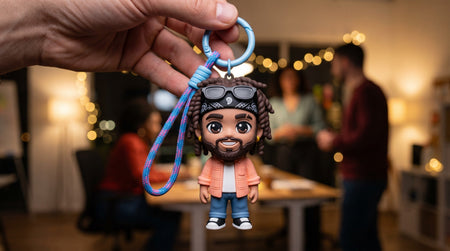
A Memory Figurine kept on a keychain becomes part of your daily ritual without demanding ceremony. You feel it in your pocket when you reach for your keys. You see it on the kitchen counter when you set your bag down. The pain of loss slowly braids itself into the comfort of presence, and over time, what was once an open wound becomes something closer to a quiet companion.
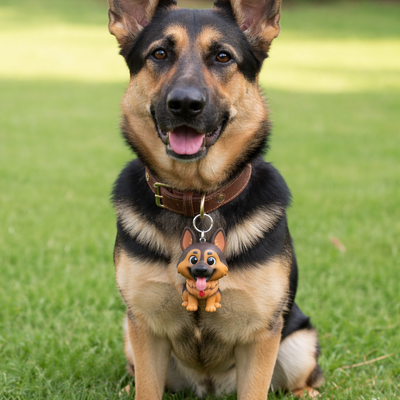
If you're in this stage of grief, the SnapFig Custom Miniature Photo Figure Resin Keychain is built for exactly this purpose. It captures the specific tilt of your dog's head, the asymmetry of your cat's markings, the goofy grin that was theirs alone. The resin has a real weight to it - not the hollow, rattling feel of a cheap charm, but a small, solid presence that warms slightly in your palm. You can take your furry friend on every new adventure: every road trip, every walk, every morning coffee run where they used to ride shotgun. Profound grief, slowly transformed into a comforting daily presence.
✈️ Bridging the Miles: Physical Tokens for Long-Distance Loved Ones
Long-distance relationships have a strange relationship with technology. We have FaceTime. We have constant texting. We have shared photo albums that update in real time. By every measurable standard, we are more "connected" to far-away loved ones than any generation in history.
And yet. Anyone who has actually lived through one will tell you the truth: video calls aren't enough.
There's a specific loneliness that hits at 11 p.m., after the call ends and the screen goes dark. The room feels emptier than it did before you picked up the phone. You spent an hour seeing their face, and now you're sitting in silence, and the only proof they exist is a chat history that already feels like it happened to someone else.
This is the gap a physical keepsake fills. Not as a replacement for the person, but as a small, steady anchor in the rooms where they're missing.
A figurine of your partner on the bedside table is the first thing you see when you open your eyes and the last thing you see before you turn off the lamp. It doesn't ping. It doesn't need a charger. It just sits there, quietly proving that the relationship has weight, even when the miles say otherwise. Parents send them to kids who moved away for college. Adult children keep small ones of aging parents in another country. Couples separated by visas, deployments, or just a stubborn job market keep them close.
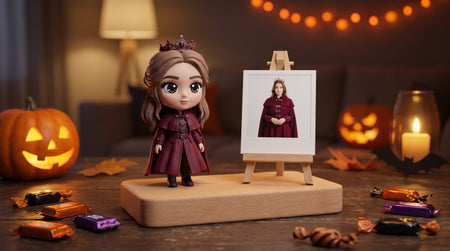
For this kind of presence, the SnapFig Custom 3D Figurine holds the kind of detail that does the emotional work. The way they actually stand. The jacket they always wear. The specific smile that's only ever directed at you. It becomes a warm, tangible piece of home in a place that doesn't yet feel like home, and a reminder that some bonds aren't measured in miles.

✨ The SnapFig Difference: From Cold Pixels to Warm Reality
There are plenty of services that will print your photo on a mug or a canvas. That's not what we do.
1. Emotional Value: We don't print things, we resurrect memories.
Turning 2D photos into 3D objects isn't a novelty trick. It's a translation - taking something that exists only as light on a screen and giving it the one thing it's always been missing: physical weight in the world. A photo lives in your phone. A figurine lives in your life.
2. Unmatched Realism: The micro-expressions are everything.
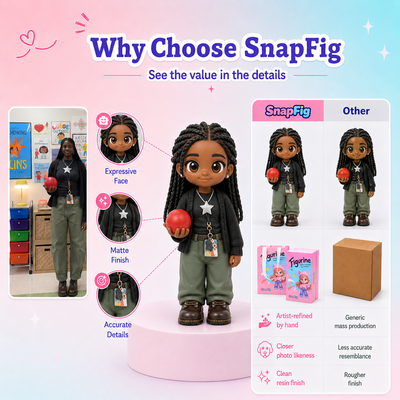
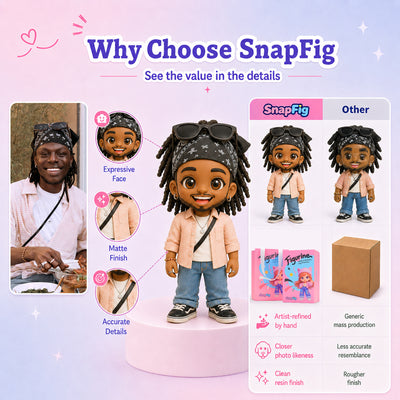
Our AI 3D modeling captures the details that generic gifts always miss. The exact tilt of your dog's head when they hear the treat bag. The slight asymmetry in your partner's smile that you'd recognize from across a crowded room. The specific way your grandmother held her hands. These aren't approximations. They're what makes the figurine feel like them and not like a stranger wearing their clothes. The full-color 3D resin printing means colors stay accurate and vivid - no fading, no peeling, no hand-painting inconsistencies that drift over time.
3. Premium Material: Weight you can feel.
The high-grade resin we use has a smooth, matte tactile quality that's immediately recognizable. It's not the slick, hollow feel of injection-molded plastic toys. It has heft. It has substance. When you set it down on a desk, it sounds like an object, not a trinket. When you pick it up, it warms slightly to your hand. This is the physical foundation that makes the emotional weight believable.
💖 Conclusion
The deepest reason tangible memorials matter has nothing to do with technology or craftsmanship. It's that human beings have always needed to hold the things we love. We've done it with photographs, lockets, ashes, ribbons, rings, and stones for as long as we've been making meaning out of loss.
A digital photo is a reference. A Memory Figurine is a presence. One reminds you. The other keeps you company.
If there's a face you can't stop thinking about - a pet you're still grieving, a partner who's far away, a person you simply don't want to forget - explore the SnapFig collection and see what it feels like to give that memory a body in the world. Some loves are too heavy to keep on a screen.
❓ Frequently Asked Questions
Why are tangible memorial gifts better than digital photos?
Tangible memorial gifts engage haptic memory—the way our brains encode emotional information through touch. While digital photos are great for storage, a physical object provides weight, texture, and a constant visual presence that genuinely soothes the nervous system during grief or separation.
What is a memory figurine?
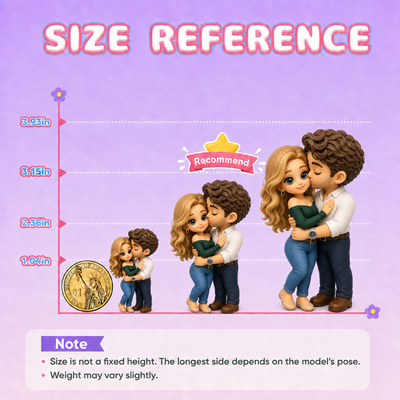
A memory figurine is a custom, 3D printed statue crafted from high-grade, full-color resin based on a photograph. It transforms a flat, 2D memory into a realistic, pocket-sized physical object that you can hold, display, and carry with you.
How can a custom figurine help with pet loss?
Pet loss often leaves owners without a physical outlet for their love. A custom pet figurine or keychain gives that grief a destination. It serves as a comforting daily reminder of your pet's unique expressions and allows you to carry a piece of them on your daily routines.
Are SnapFig custom 3D figurines durable?
Yes. SnapFig uses high-grade, full-color 3D resin printing. This premium material ensures vivid colors without peeling or fading over time, while providing a solid, matte texture with a reassuring physical heft that won't feel hollow or cheap.